

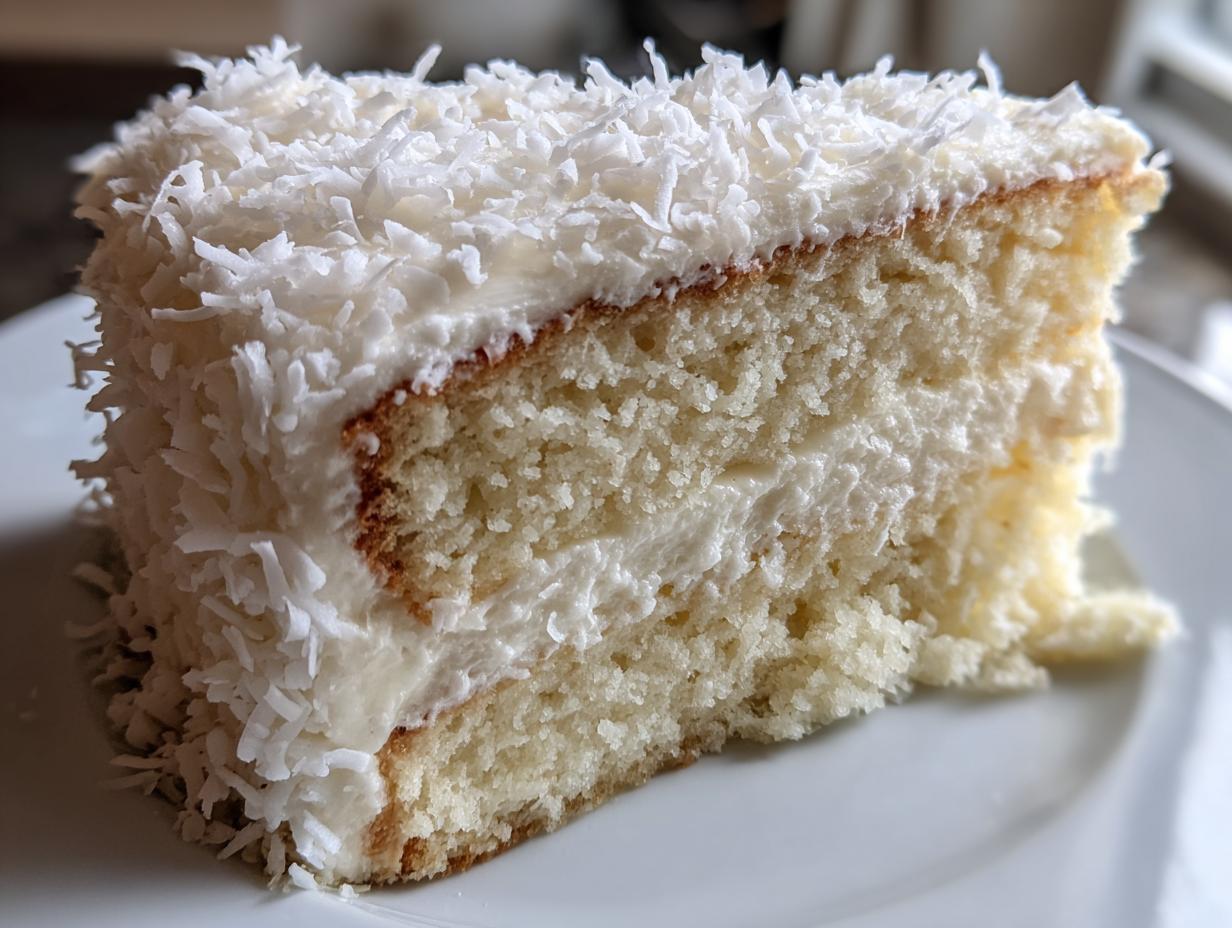
When you think about Sunday dinners down South, you just have to think about a cake piled high with snow-white flakes. Baking here isn’t about fuss; it’s about making something truly special for the people you love, and nothing says celebratory like a dreamy slice of homemade goodness. That’s exactly what I wanted to bring to you with this one: the absolute best, show-stopping **coconut cake** you’ll ever try. This is my Moist & Fluffy Southern Coconut Cream Layer Cake, and trust me, it’s designed for real-life kitchens. As I always say over on the About page, my goal here at YumDrizzle is to take those impressive, bakery-style desserts and show you they’re totally achievable right now, using ingredients you probably already have stocked up.
- Why This Moist Coconut Cake Recipe Delivers Bakery Style Perfection
- Gathering Ingredients for Your Fluffy Coconut Layer Cake
- Step-by-Step Instructions for the Southern Coconut Cake
- Tips for Achieving the Best Coconut Cake Texture
- Variations on This Classic Coconut Recipe
- Serving Suggestions for Your Homemade Coconut Dessert
- Storage and Reheating Instructions for Coconut Cake
- Frequently Asked Questions About Making Coconut Cake
- Estimated Nutritional Data for This Coconut Cake
Why This Moist Coconut Cake Recipe Delivers Bakery Style Perfection
I promise you, this isn’t just another dessert recipe—this is the ultimate **moist coconut cake recipe**. So many times, coconut cakes turn out dry or too dense, but not this one. We are aiming for that gorgeous, light, and fluffy texture you usually only find behind the glass at a great Southern bakery. That fluffy texture is really the secret sauce.
The secret to getting that melt-in-your-mouth quality without any fuss is really about temperature care. Make sure your butter, eggs, and buttermilk are all at room temperature before you even think about turning on the mixer. Letting them warm up properly helps them emulsify beautifully when they combine. This simple step creates tiny air pockets that keep the layers wonderfully light. It’s the key to achieving that true **bakery style coconut cake** experience right in your home kitchen!
Gathering Ingredients for Your Fluffy Coconut Layer Cake
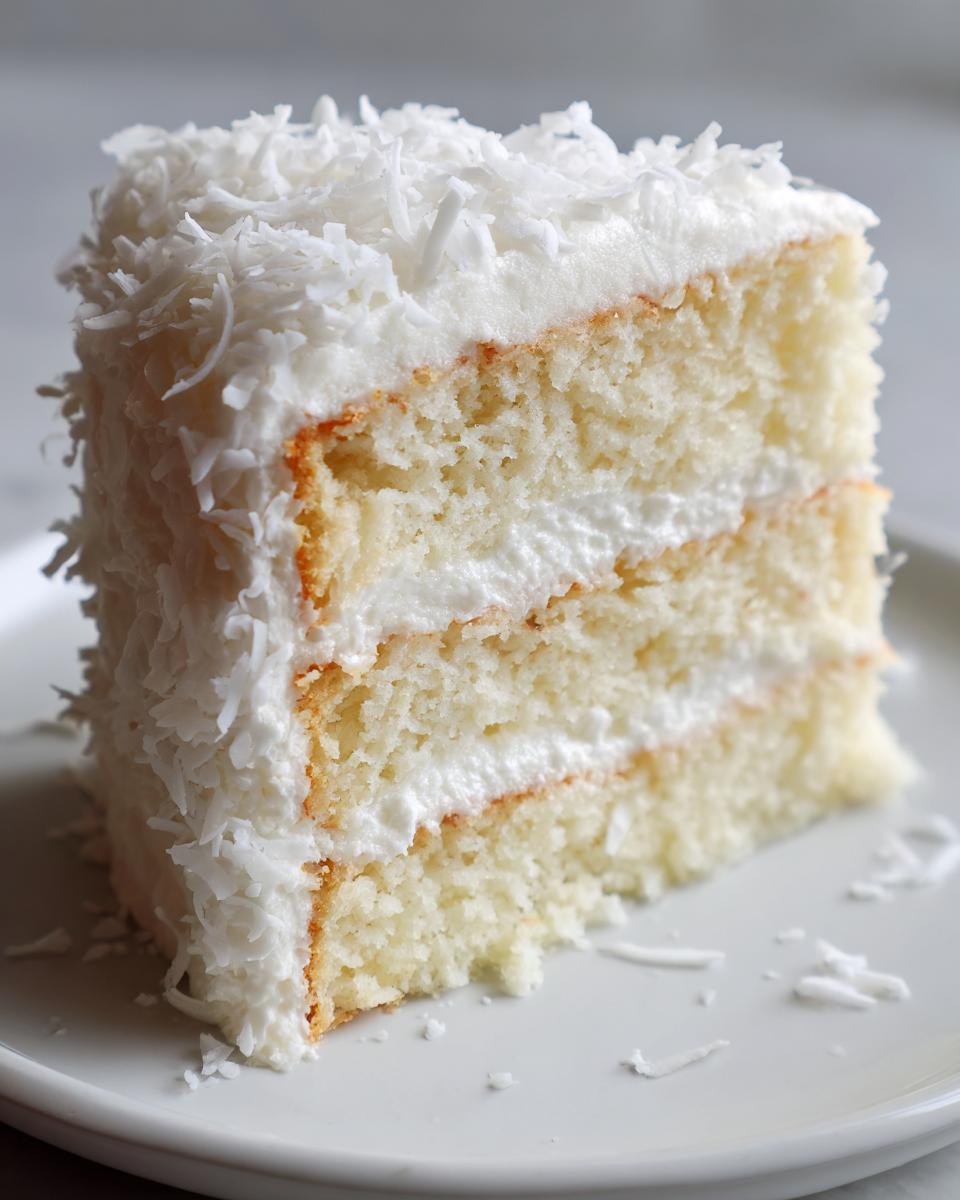
Okay, step one is getting everything ready. I hate having to stop mid-mix because the butter’s too hard! For this **fluffy coconut layer cake**, we are dividing the ingredients into three crucial groups—the cake itself, the syrup that keeps it heavenly moist, and finally, the frosting. See? Already sounds organized, right?
Pay close attention to the temperature notes. When I talk about buttermilk or eggs, they need to be sitting out for at least an hour. That’s non-negotiable if we want that wonderful **light and airy cake** structure.
For the Coconut Infused Cake Layers
This is the heart of the whole operation. Make sure you grab your full-fat coconut milk here; the light version just won’t give you that rich flavor we’re after. And those room-temperature eggs? They whip up so much better, trust me!
- 1 3/4 cups all-purpose flour
- 1 3/4 cups granulated sugar
- 1 tablespoon baking powder
- 1/2 teaspoon salt
- 1 cup unsalted butter, softened
- 4 large eggs, room temperature
- 1 cup buttermilk, room temperature
- 1 teaspoon vanilla extract
- 1/2 cup coconut milk (full fat)
- 1 cup sweetened shredded coconut (for cake batter)
For the Coconut Soaking Syrup
Don’t skip this syrup! It’s what takes this cake from good to truly unforgettable. Brushing this on while the layers are still warm seals in moisture and makes this whole **coconut cake** feel like it just came from the best little bakery in town.
- 1/2 cup cream of coconut (like Coco Lopez)
- 1/4 cup granulated sugar (for soaking syrup)
- 1/4 cup water (for soaking syrup)
For the Dreamy Coconut Cream Cake Frosting
This frosting is everything! It’s thick, it’s sweet, and that splash of cream of coconut gives it that unmistakable tropical punch. If you are looking to veer off into a different direction, you can check out my vanilla buttercream recipe, but for this cake, we need the cream of coconut for the true **coconut cream cake frosting** magic.
- 1 cup unsalted butter, softened
- 4 cups powdered sugar, sifted
- 1 teaspoon vanilla extract (for frosting)
- 1/4 cup cream cheese, softened (for frosting)
- 1/2 cup cream of coconut (for frosting)
- 1 1/2 cups sweetened shredded coconut (for coating)
Step-by-Step Instructions for the Southern Coconut Cake
Alright, we have all our gorgeous ingredients ready, now let’s make this thing happen! Baking this **Southern style coconut cake** takes a bit of focus, but honestly, the steps are so straightforward. Remember, a great cake is built layer by layer, both literally and figuratively. We’ll preheat to 350°F (175°C) and get those three 8-inch pans greased, floured, and lined with parchment on the bottom. That parchment is just insurance; we aren’t messing around with sticking!
Mixing the Coconut Cake Batter
First things first, whisk your dry stuff—flour, sugar, baking powder, salt—in that big bowl. Now, add in that softened butter. You’re going to mix this low and slow until it looks like coarse sand. This is the creaming base! Next, in a separate bowl, whisk up your eggs, room-temp buttermilk, vanilla, and that rich coconut milk. Slowly pour the wet mixture into the “sand,” mixing on medium speed until it’s *just* combined. Here’s my big tip: Do not, I repeat, DO NOT overmix! Stop as soon as you see the flour disappear. That’s how we keep it fluffy. Finally, gently fold in that cup of shredded coconut.
Baking, Soaking, and Cooling the Layers
Divide that perfect batter evenly and pop those beauties into the oven for about 28 to 32 minutes. Watch them closely; you’re looking for that toothpick test. While they bake (or right after you pull them out), make your syrup by warming up the water and sugar until it dissolves, then stir in that cream of coconut. Once the layers are cool enough to handle but still warm, brush that syrup generously over the top of each one. They soak up all that goodness! Then, you MUST let them cool completely on a wire rack. Frosting a warm cake leads to disaster, honey.
Assembling the White Coconut Layer Cake
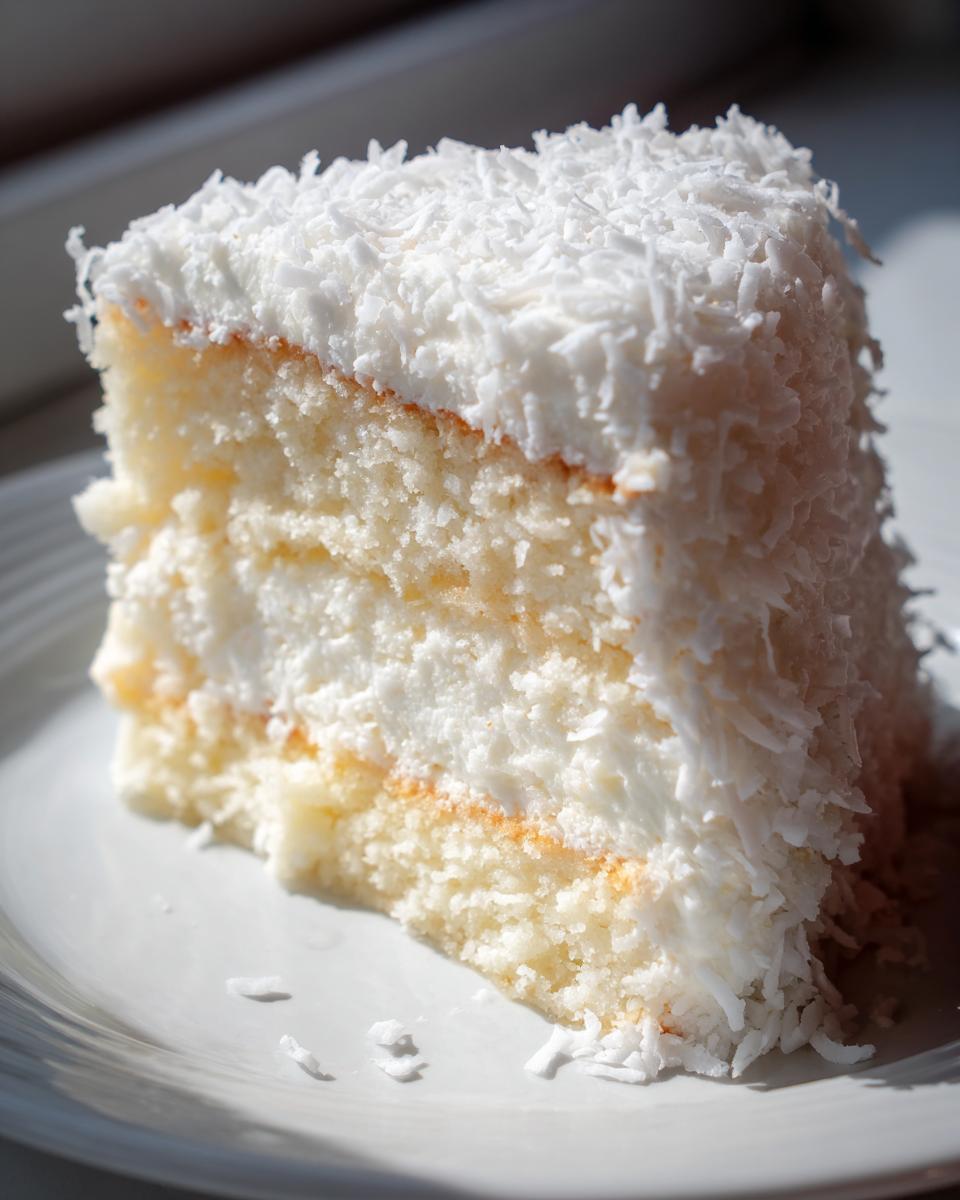
Time for the **coconut cream cake frosting**! Use your mixer to beat that softened butter and cream cheese until they are super smooth—no lumps allowed. If you want to see how I get my cheese truly smooth for my frostings, check out my cream cheese frosting post! Then, take your time adding that sifted powdered sugar, followed by the vanilla and the rest of the cream of coconut. Beat it until it looks like fluffy clouds; it should hold its shape nicely. Place your first layer down, spread on some frosting, and sprinkle a generous amount of shredded coconut over it. Repeat for the middle layer. Then, frost the top and sides of your entire **white coconut layer cake** and press the remaining coconut right onto the sides for that snowy, impressive finish!
Tips for Achieving the Best Coconut Cake Texture
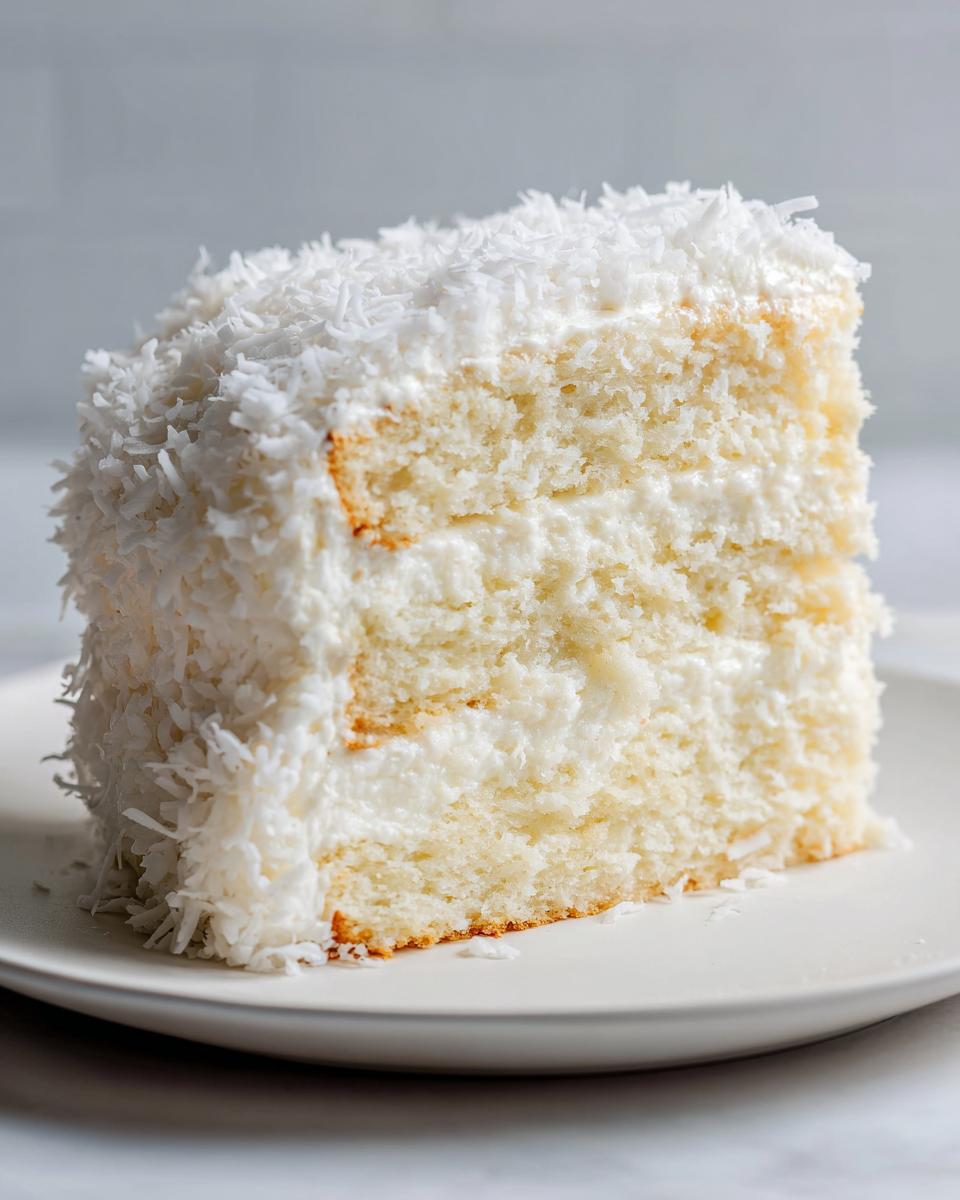
You want that perfect crumb, right? The kind that makes everyone ask if you bought this **coconut cake** from a fancy shop? It all comes down to a couple of tiny details that make a huge difference in the final texture. We are aiming for that **light and airy cake** feel every single time we bake!
Ingredient Temperature and Mixing
I can’t stress this enough: room temperature everything! Cold ingredients—especially the butter and the eggs—just won’t cream properly. When they are warm enough, they trap air beautifully, leading straight to that **dreamy coconut dessert** mouthfeel. Don’t rush the creaming phase; that’s where the air gets locked in before the oven.
Working with Coconut Cream Cake Frosting
Sometimes on a really hot day, my **coconut cream cake frosting** gets a little loose while I’m trying to stack the layers. If that happens, don’t panic! Just scoop your frosting bowl into the fridge or freezer for about 15 minutes. A quick chill firms it right back up so you can get those clean, sharp edges on your layers without it sliding everywhere.
Variations on This Classic Coconut Recipe
Never get stuck in a baking rut! While I stand by this Southern classic, sometimes you want to twist things up a bit. If you’re looking to lean into that ultra-tropical feel, you could try swapping out the butter for coconut oil in the batter. Just be ready, the texture will be a little different—maybe a tiny bit richer, but still delicious!
If you find the standard version is a little too sweet for your crew, try using unsweetened shredded coconut flakes instead of the sweetened kind in the cake batter itself. You’re still going to get that amazing texture, but you control the sugar level more directly. Don’t forget, a little lime zest in either the syrup or the frosting turns this into a spectacular **tropical cake recipe**!
For a fun twist, you could also explore making individual portions. You can easily turn this batter into cupcakes! Just reduce the baking time to about 18-20 minutes. They cool faster, so you might need to use less soaking syrup per ‘cake’ to avoid heavy sogginess. It’s a fun way to make this amazing dessert for an easier grab-and-go situation, maybe follow my tips for my plum cake when adapting to small pans!
Serving Suggestions for Your Homemade Coconut Dessert
When you’ve worked this hard on a gorgeous **coconut cake**, you need the right drink to go with it! This cake is so rich and sweet, it begs for something a little tart to balance things out. It makes a perfect **coconut cake for birthdays** or any big event.
I always love serving this alongside a bright, crisp drink—something that cuts through that sweet frosting. I’ve made a killer cranberry pomegranate margarita that is shockingly good with coconut if you’re having an adult party. For a simpler treat, just a strong cup of black coffee lets the coconut flavor really shine through!
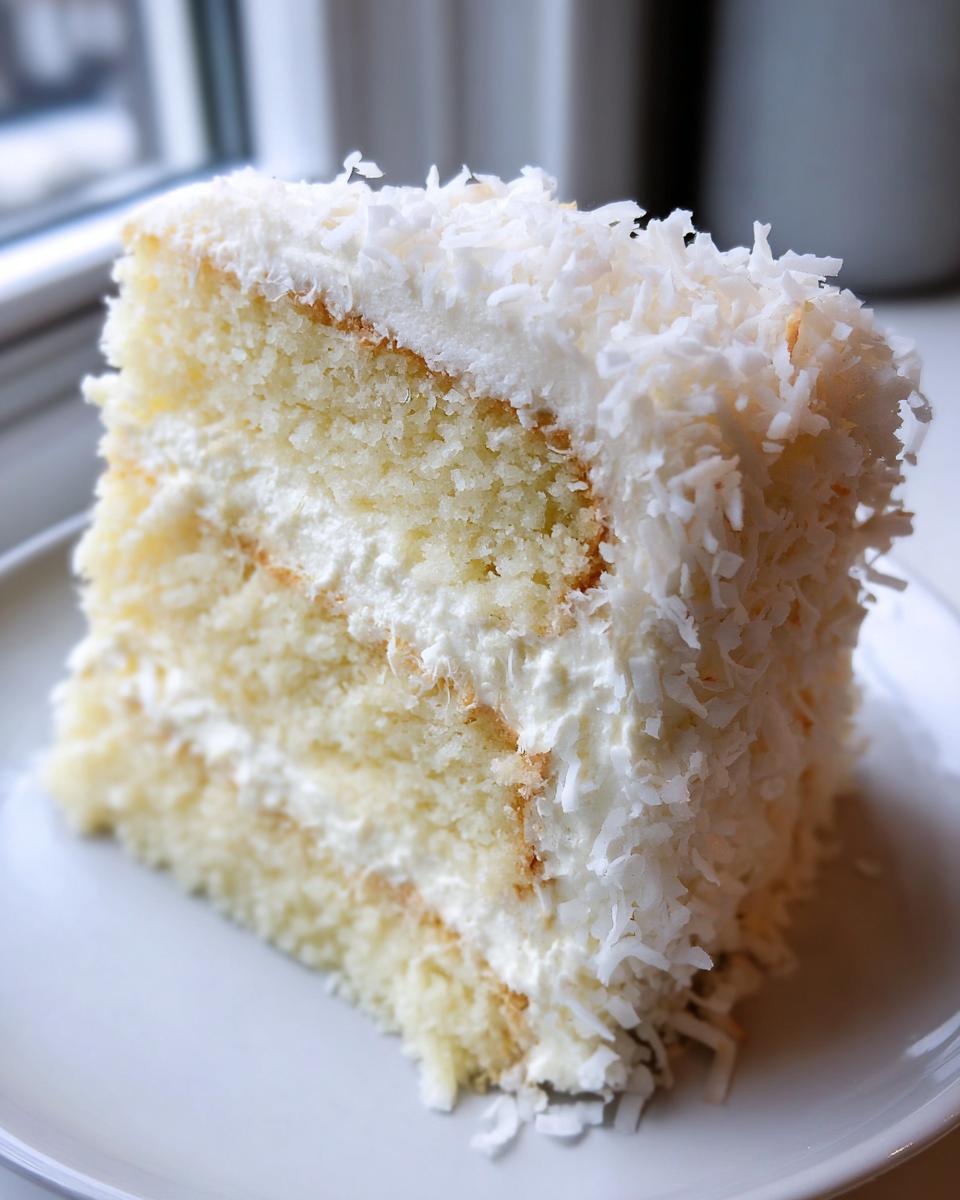
Storage and Reheating Instructions for Coconut Cake
So, you managed to have leftovers? Hooray! This **moist coconut cake recipe** actually keeps really well, but since we used cream cheese in that **coconut cream cake frosting**, we have to be a little careful about how we store it. We want those layers to stay tender, not turn into a hard brick!
If you aren’t serving it all right away, cover the whole cake loosely with plastic wrap. Because it’s got butter *and* cream cheese in the frosting, you really should keep it in the refrigerator. Just make sure the plastic wrap doesn’t actually touch the shredded coconut coating, or you’ll end up peeling your beautiful snow globe finish right off!
For the best eating experience—especially since we want that soft, **fluffy coconut layer cake** texture—take it out of the fridge about one to two hours before you plan to serve it. Letting it come back toward room temperature is super important. The butter and cream cheese soften up, and suddenly, that cake tastes like it was just baked fresh today. Seriously, never serve this stiff and cold!
If you somehow end up with un-frosted layers saved away, wrap those tightly in plastic wrap and they can hang out in a cool pantry for about two days, or freeze them for a month. When you pull them out, let them thaw still wrapped so no condensation ruins the crumb. You can even brush on a tiny bit more of that simple syrup if they look a little thirsty after thawing before you stack and frost them!
Frequently Asked Questions About Making Coconut Cake
I know you were probably wondering a few things while that coconut cake was baking away. We all have those little recipe hurdles we need to clear to feel confident! Here are a few questions I get asked all the time about messing up that perfect texture or making this a little easier on myself.
Can I use canned flaked coconut instead of the shredded kind?
That’s a really common question, especially if you are looking for that beautiful snowy finish! For the batter texture, sweetened shredded coconut is best because it blends nicely. For the outside coating, make sure you are using good quality sweetened shredded coconut for that classic look. If you are using toasted coconut for garnish, that’s different, but for the main coating, stick to the standard sweetened shredded flakes mixed with the frosting; they really give you that amazing, full texture.
Is the soaking syrup really necessary for a moist coconut cake recipe?
Oh, honey, yes! If you want that truly **moist coconut cake recipe** texture, you absolutely should not skip that syrup. The cake layers themselves are light and fluffy, so they love to soak up moisture. That simple syrup goes in while the layers are warm, which lets them absorb the liquid without dissolving the cake structure. If you skip it, you risk ending up with a drier crumb, even with that rich frosting, so take the extra five minutes!
Can I turn this fluffy coconut layer cake into cupcakes?
You totally can! Cupcakes are fun, especially when you want an **easy coconut dessert** for a crowd that doesn’t involve stacking. Just scoop your batter into lined muffin tins—fill them about two-thirds full—and bake them for about 18 to 20 minutes at 350°F. Remember, since they bake so much faster, you might want to use less syrup on top, or just stick to piping that amazing **coconut cream cake frosting** on top without soaking them at all.
Why does my frosting feel grainy when I try to make bakery style coconut cake frosting?
If your frosting is grainy, nine times out of ten it comes down to the powdered sugar. You have to use sifted powdered sugar, plain and simple! Powdered sugar clumps up, and if those clumps don’t get broken down in the mixer, they stay little crunchy sugar mountains in your frosting. Once you’ve beaten the butter and cream cheese until totally smooth, add the sugar slowly, one cup at a time, ensuring each addition gets fully incorporated before adding the next. If you want more tips on getting perfect frosting smoothness, check out my post about chocolate pudding; the technique for smoothing out pudding works almost perfectly for creamy frostings too!
Where can I find more tropical cake recipe inspiration?
I love baking with tropical flavors! If you are totally obsessed with coconut and pineapple (which pairs beautifully with this cake, by the way!), there are so many ways to go! If you want to look around at some other ideas, you can check out what the folks over at Cookies and Cups are baking up, or explore my own suggestions on other moist cakes for future baking adventures.
Estimated Nutritional Data for This Coconut Cake
Now, I know we bake this **coconut cake** because it tastes like heaven, right? Who cares about the numbers when it tastes this good? But since you asked so nicely, here is a general snapshot of what you’re looking at per slice. Just a friendly reminder, especially when dealing with something as rich as a **coconut cream cake frosting**, these numbers are totally estimates!
My estimates are based on cutting the cake into 12 generous slices, like I usually do when I serve it for celebrations. If you cut it into smaller slivers—I won’t judge, but I’ll weep a little—the numbers change!
- Serving Size: 1 slice
- Calories: 450
- Sugar: 55g (That’s the good stuff!)
- Fat: 24g
- Carbohydrates: 58g
- Protein: 4g
The exact amount of sugar and fat will wobble depending on the brand of cream of coconut you use or how generously you slather on that delicious topping. This is just a rough guide to show that yes, this is a delightful, satisfying, and celebratory **shredded coconut cake**!
PrintMoist & Fluffy Southern Coconut Cream Layer Cake
Bake a show-stopping Southern Coconut Cream Layer Cake that is light, fluffy, and full of tropical coconut flavor. This recipe produces incredibly moist cake layers and a rich coconut cream frosting, perfect for any celebration.
- Prep Time: 30 min
- Cook Time: 35 min
- Total Time: 65 min
- Yield: 12 servings 1x
- Category: Dessert
- Method: Baking
- Cuisine: American
- Diet: Vegetarian
Ingredients
- 1 3/4 cups all-purpose flour
- 1 3/4 cups granulated sugar
- 1 tablespoon baking powder
- 1/2 teaspoon salt
- 1 cup unsalted butter, softened
- 4 large eggs, room temperature
- 1 cup buttermilk, room temperature
- 1 teaspoon vanilla extract
- 1/2 cup coconut milk (full fat)
- 1 cup sweetened shredded coconut (for cake batter)
- 1/2 cup cream of coconut (like Coco Lopez)
- 1/4 cup granulated sugar (for soaking syrup)
- 1/4 cup water (for soaking syrup)
- 1 cup unsalted butter, softened (for frosting)
- 4 cups powdered sugar, sifted (for frosting)
- 1 teaspoon vanilla extract (for frosting)
- 1/4 cup cream cheese, softened (for frosting)
- 1/2 cup cream of coconut (for frosting)
- 1 1/2 cups sweetened shredded coconut (for coating)
Instructions
- Preheat your oven to 350°F (175°C). Grease and flour three 8-inch round cake pans. Line the bottoms with parchment paper.
- In a large bowl, whisk together the flour, sugar, baking powder, and salt.
- Add the softened butter to the dry ingredients and mix on low speed until the mixture resembles coarse sand.
- In a separate bowl, whisk together the eggs, buttermilk, vanilla extract, and coconut milk.
- Gradually add the wet ingredients to the dry ingredients, mixing on medium speed until just combined. Do not overmix.
- Gently fold in the 1 cup of shredded coconut.
- Divide the batter evenly among the prepared cake pans. Bake for 28 to 32 minutes, or until a toothpick inserted into the center comes out clean.
- While the cakes cool slightly, prepare the soaking syrup: Combine 1/4 cup sugar and 1/4 cup water in a small saucepan. Heat until the sugar dissolves. Set aside to cool.
- Once cakes are removed from pans and placed on a wire rack, brush the tops of each warm layer generously with the coconut soaking syrup. Let cakes cool completely.
- Prepare the coconut cream frosting: Beat the 1 cup of softened butter and cream cheese until smooth. Gradually add the powdered sugar, mixing until combined. Beat in the vanilla extract and 1/2 cup cream of coconut until the frosting is light and fluffy.
- Place the first cake layer on a serving plate. Spread a layer of frosting over the top. Sprinkle with some of the reserved shredded coconut.
- Top with the second cake layer, frost, and sprinkle with coconut. Repeat with the third layer.
- Frost the top and sides of the entire cake with the remaining frosting. Press the remaining shredded coconut onto the sides and top of the cake for a snowy finish.
Notes
- For extra coconut flavor in the cake layers, use coconut oil instead of butter, though the texture will be slightly different.
- Chill the frosting for 15 minutes if it becomes too soft while you are assembling the layers.
- Use unsweetened coconut flakes if you prefer a less sweet overall cake, but adjust the sugar in the soaking syrup if needed.
Nutrition
- Serving Size: 1 slice
- Calories: 450
- Sugar: 55g
- Sodium: 280mg
- Fat: 24g
- Saturated Fat: 15g
- Unsaturated Fat: 9g
- Trans Fat: 0.5g
- Carbohydrates: 58g
- Fiber: 1g
- Protein: 4g
- Cholesterol: 85mg