

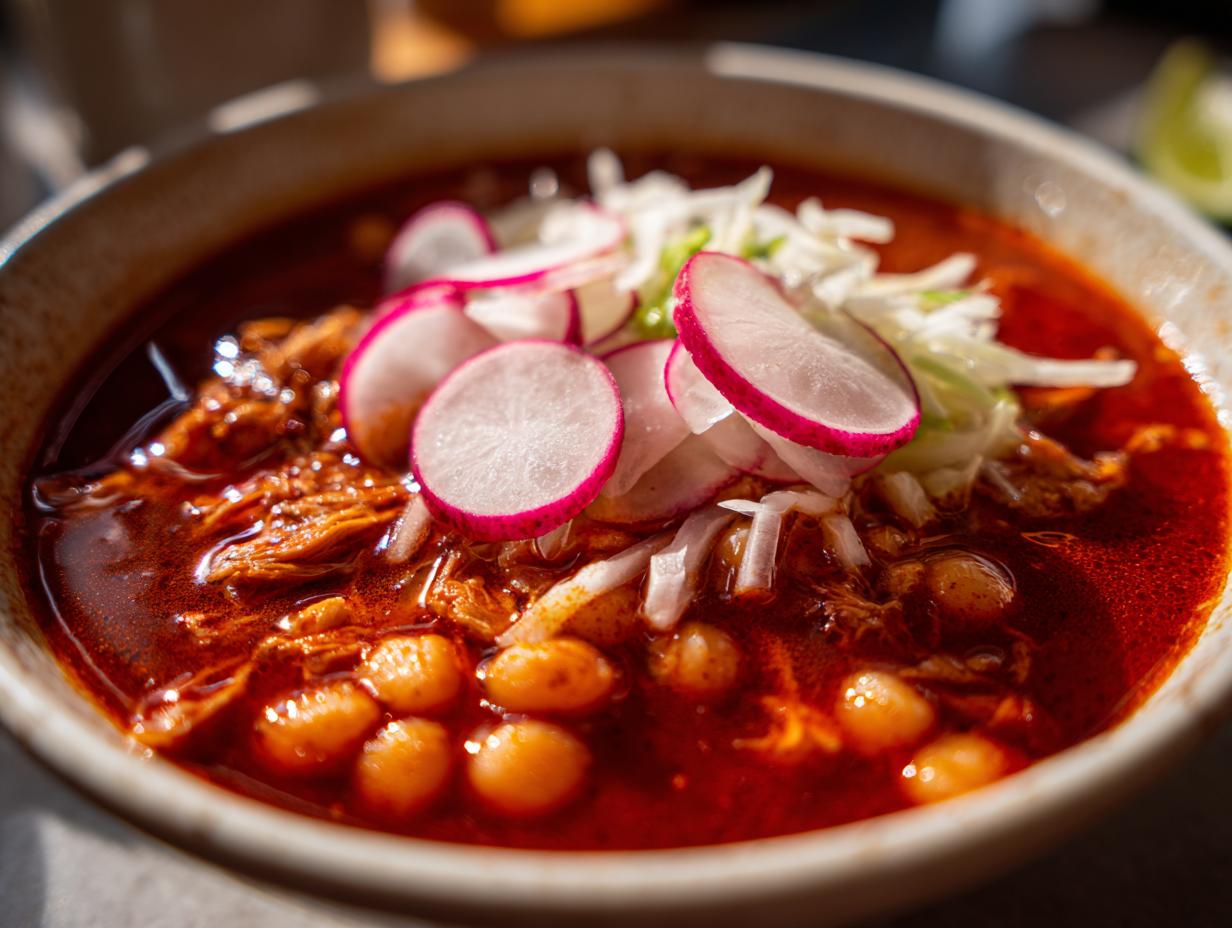
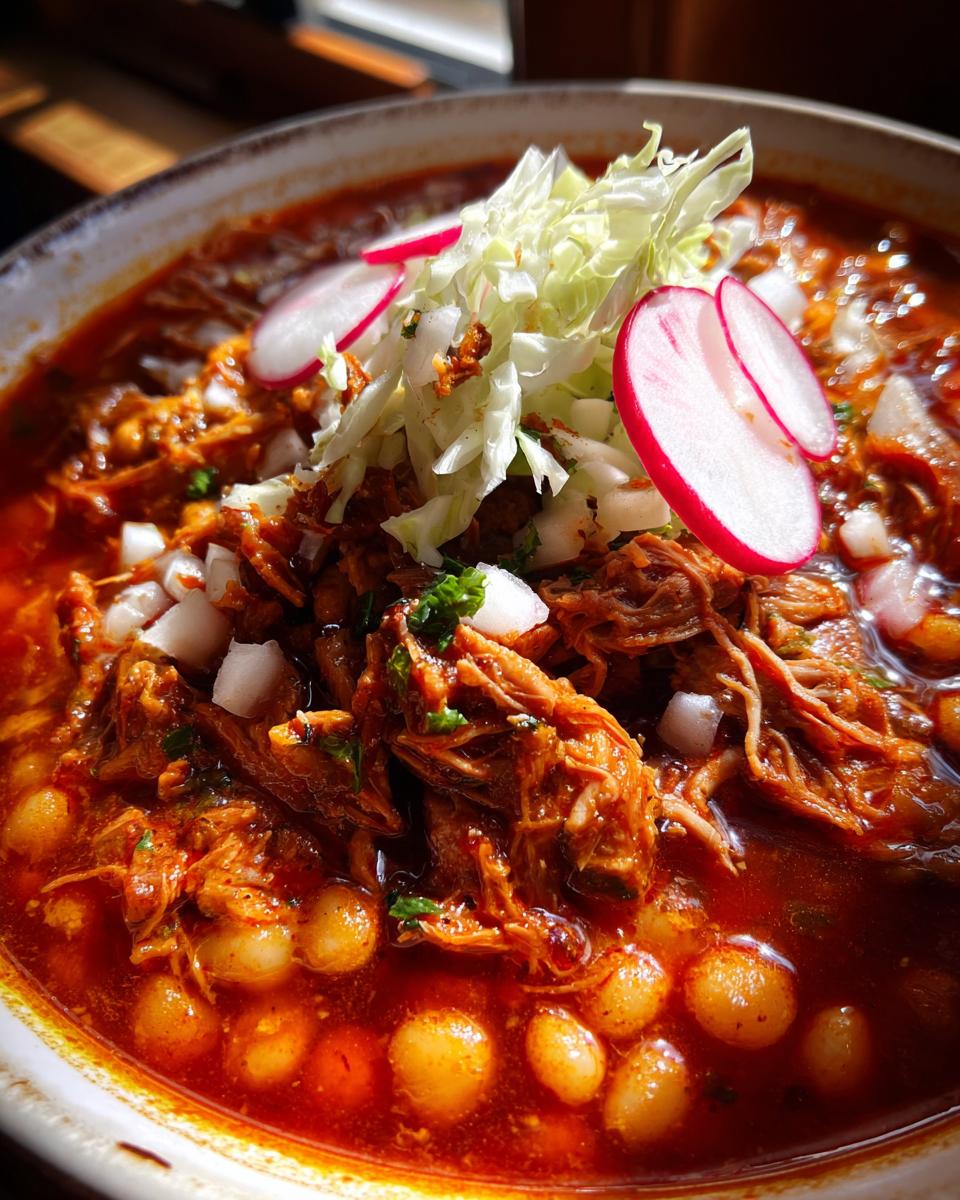
If you’ve ever spent a chilly December evening dreaming about the perfect, soul-satisfying bowl of stew, then you know why we cling to our **Pozole rojo** recipe. Seriously, this isn’t just soup; this is the centerpiece of Christmas Eve for so many families, full of ancient history and warmth. I spent years learning how to capture real, authentic flavor—not the complicated, intimidating stuff—but the robust taste you find in the greatest food trucks and hidden spots nationwide. My mission for you is simple: make this amazing Mexican hominy stew so tender and richly colored that it tastes like an instant tradition, even if it’s your very first time making it. For more on how we value accessibility and real flavor inspiration, check out our story here: how we find real flavor! You’ve got this!
- Why This Pozole Rojo Recipe Connects with Tradition
- Gathering Ingredients for Authentic Pozole Rojo
- Step-by-Step Instructions for Perfect Pozole Rojo
- Tips for Success When Making Pozole Rojo
- Serving Suggestions for Your Festive Pozole Rojo
- Storing and Reheating Leftover Pozole Rojo
- Frequently Asked Questions About Pozole Rojo
- Estimated Nutritional Data for This Pozole Rojo Recipe
- Share Your Experience Making This Pozole Rojo
Why This Pozole Rojo Recipe Connects with Tradition
Making this authentic Pozole rojo feels like participating in something ancient and important. It’s warming, celebratory, and honestly, the deep color alone tells you this is special. Trust me, when you serve this, you are serving culture in a bowl!
- The pork is simmered until it literally melts off your fork—pure comfort.
- We use guajillo and ancho chiles to achieve that signature, deep, non-ketchup-red color.
- It’s hearty enough for a big gathering, making it the perfect Christmas Eve pozole centerpiece.
- The combination of hominy and that rich broth is truly soul-satisfying.
Gathering Ingredients for Authentic Pozole Rojo
Okay, let’s talk about what you need to grab at the store. Forget shortcuts here; the magic of this pork and red chile soup is in the quality of just a few key players. Since this is a big pot of goodness, you’ll want to make sure you stock up. We aren’t doing any substitutions on the main ingredients, trust me. If you can’t find good dried chiles, the sauce just won’t sing right!
Essential Components for Your Pork and Red Chile Soup
The meat needs to be something that can break down beautifully over a long simmer. I always go for pork shoulder—about four pounds, cut into good, hearty 2-inch chunks. That fat melts right into the broth and makes everything rich.
Then there’s the hominy. Get that large white corn, the nixtamalized stuff, and make sure you drain and rinse that big can well. Now, for the color and the fire: you need dried chiles. We use twelve guajillo chiles because they give that gorgeous red color without too much heat, mixed with four dried ancho chiles for depth. Remember to stem them and shake out all those seeds before you do anything else. That’s the secret to a truly deep red Pozole rojo!
Step-by-Step Instructions for Perfect Pozole Rojo
This is where the love happens! I know looking at these steps might seem like a lot, but trust me, once you get the pork going, the chile sauce just flows. We’re moving slow and easy here to build that incredible depth. Pay attention to the timing—it’s essential for that melt-in-your-mouth pork and that smooth, vibrant broth.
Cooking the Pork for the Mexican Hominy Stew Base
First things first: get that pork shoulder into your biggest stockpot. Toss in your onion, garlic, and salt, then add enough water to cover everything by about an inch. Bring that up to a hard boil, and then immediately drop it down to a simmer. For the first half hour, watch it! You’ll see some grey foam rise to the top. Scoop that right off and throw it away—it helps keep your broth clean later. Let that simmer, partially covered, for a good hour and a half, maybe two hours, until that pork is so tender you can shred it with just a light touch.
Preparing the Deep Red Chile Sauce for Pozole Rojo
While the meat is softening up, tackle your dried chiles. Put the guajillos and anchos in a small pot, cover them with fresh water, and bring it all to a simmer. Take it off the heat, cover it, and just let them soak and get plump for about 30 minutes. See how soft they are now? Move those chiles and about one cup of their soaking water into the blender. Add your oregano and cumin. Here’s the critical part for a beautiful Pozole rojo: Blend it until it is absolutely, totally smooth. Then, you *must* force that puree through a fine-mesh sieve into a bowl. Press down hard with the back of a spoon to get every bit of flavor out. Toss whatever solids are left.
Combining Elements to Finish the Christmas Eve Pozole
Once the pork is done, pull it out and shred it—discard those onion and garlic halves from the broth. Now, take that glorious, strained chile sauce and pour it directly into that flavorful broth you just made. Stir it up well! Bring it back to a gentle simmer. Add the rinsed hominy and all that lovely shredded pork back in. You need this to hang out together, simmering gently, for at least 30 more minutes. This is how the flavors *really* meld! Give it a good taste before serving; that’s when you see if it needs a little extra salt!
Tips for Success When Making Pozole Rojo
Look, making a big pot of Mexican hominy stew for the family means planning ahead, right? You don’t want to be boiling pork for three hours when everyone is singing carols! The great news is that this recipe practically begs you to break it up over two days. You can totally cook the pork and make that stunning chile sauce one day, store them separately in the fridge, and then just combine everything with the hominy the next day. It actually tastes even better, honestly!
Now, let me tell you about getting the absolute deepest flavor out of those dried chiles. Before you even think about soaking them, you gotta toast them a little bit in a dry skillet. I mean, watch them like a hawk! They only need about 30 to 60 seconds per side, just until you can really smell that fruity, smoky aroma burst out. Don’t let them burn! If they blacken, your whole broth will taste bitter, and nobody wants that in their Christmas Eve pozole! Toasting them wakes up all the oils hiding inside, giving your broth that rich, robust character that screams “authentic.”
Also, don’t stress about using too much water in that initial pork boil. You’re making a broth here, not just boiling meat. When you pull the meat out, you want that liquid to be concentrated in flavor. If it looks watery, just let it simmer uncovered for an extra 15 minutes before you add the chile puree and simmer down at the end. Every drop counts when you are crafting the perfect pork and red chile soup!
Serving Suggestions for Your Festive Pozole Rojo
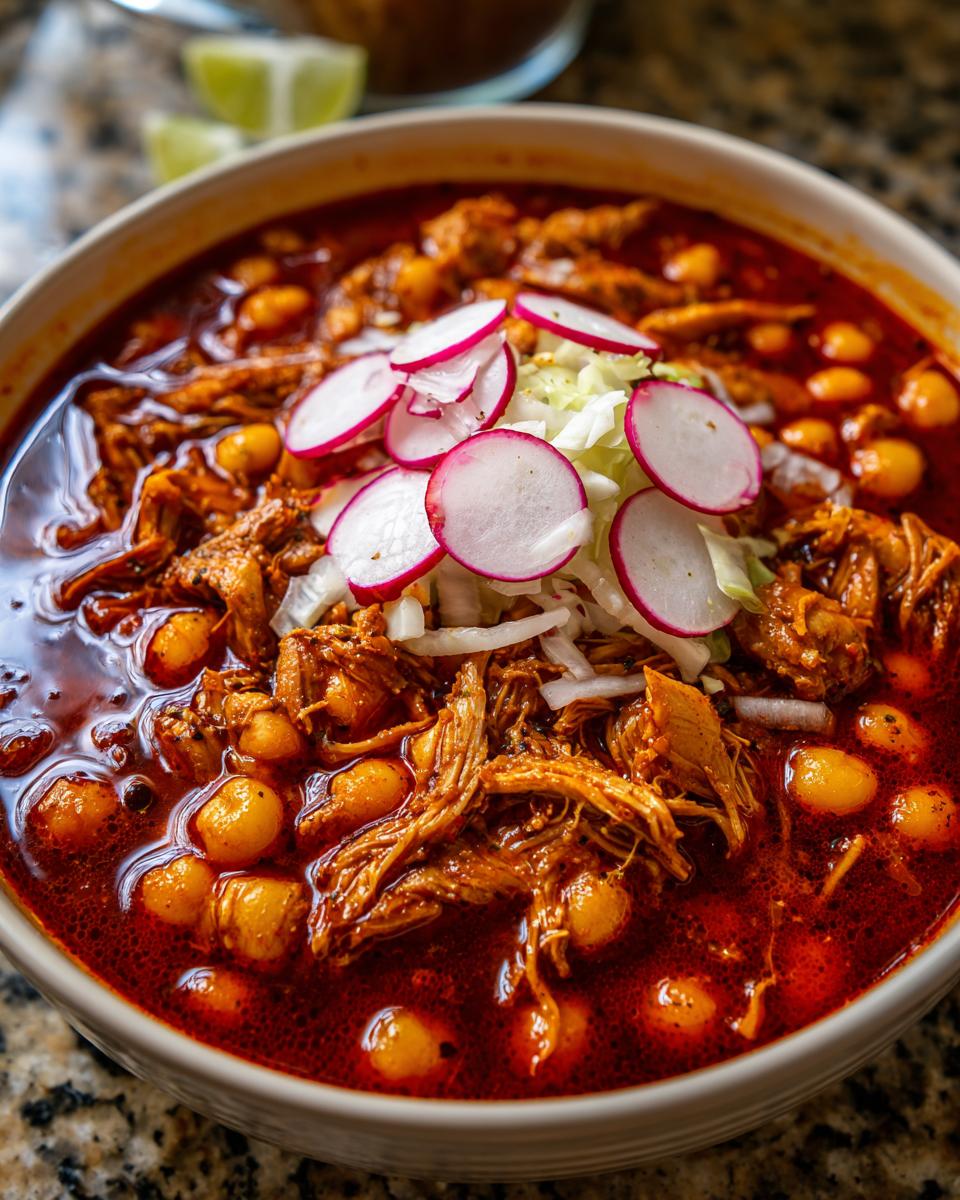
This is honestly my favorite part of making Pozole rojo—setting out the toppings! You can’t just ladle this beautiful soup into a bowl and call it done. This Mexican hominy stew is all about customization. Think of it like building your own perfect bite, every single time. It makes serving this huge pot feel communal and fun, instead of just handing someone a finished plate.
When I serve this for parties, I put out tons of little bowls filled with fresh toppings. It lets everyone—from the picky kids to my adventurous cousins—get exactly what they want in their bowl. It’s interactive, it’s vibrant, and it breaks up that rich, dark color of the broth perfectly!
Here are the absolute non-negotiables for your garnish spread:
- Shredded Greens: You need something crisp! I usually offer both finely shredded cabbage—it’s sturdier—and some crisp, shredded iceberg lettuce. It adds that crucial crunch.
- Sliced Radishes: Get them nice and thin. Their little peppery bite slices right through the richness of the pork and the chiles. Don’t skip these!
- Diced White Onion: Fine dice, please! It adds a sharp little pop that wakes everything up.
- Lime Wedges: You need the acid! A good, sharp squeeze of fresh lime over the top brightens the whole flavor profile. It honestly makes the red chile broth taste even deeper.
When everyone piles on their own radishes and drizzles their lime juice, that’s when this pork and red chile soup truly feels like a celebration. It feels welcoming, it feels abundant, and honestly, it tastes better!
Storing and Reheating Leftover Pozole Rojo
If you’re making a massive pot of Pozole rojo for a holiday gathering—and let’s face it, you should be—you are guaranteed to have leftovers. Don’t even worry about it! This stew reheats beautifully, which is another reason it’s such a fantastic dish for entertaining. You do the hard work once, and you get delicious meals all week!
The first thing you need to know is that the flavors actually get a little cozier overnight. The way the hominy absorbs the chile broth while resting is just lovely. Store any leftover Mexican hominy stew in airtight containers. You can safely keep these in the fridge for about three to four days. They pack down nicely into standard meal-prep containers, which is handy for quick lunches the next few days.
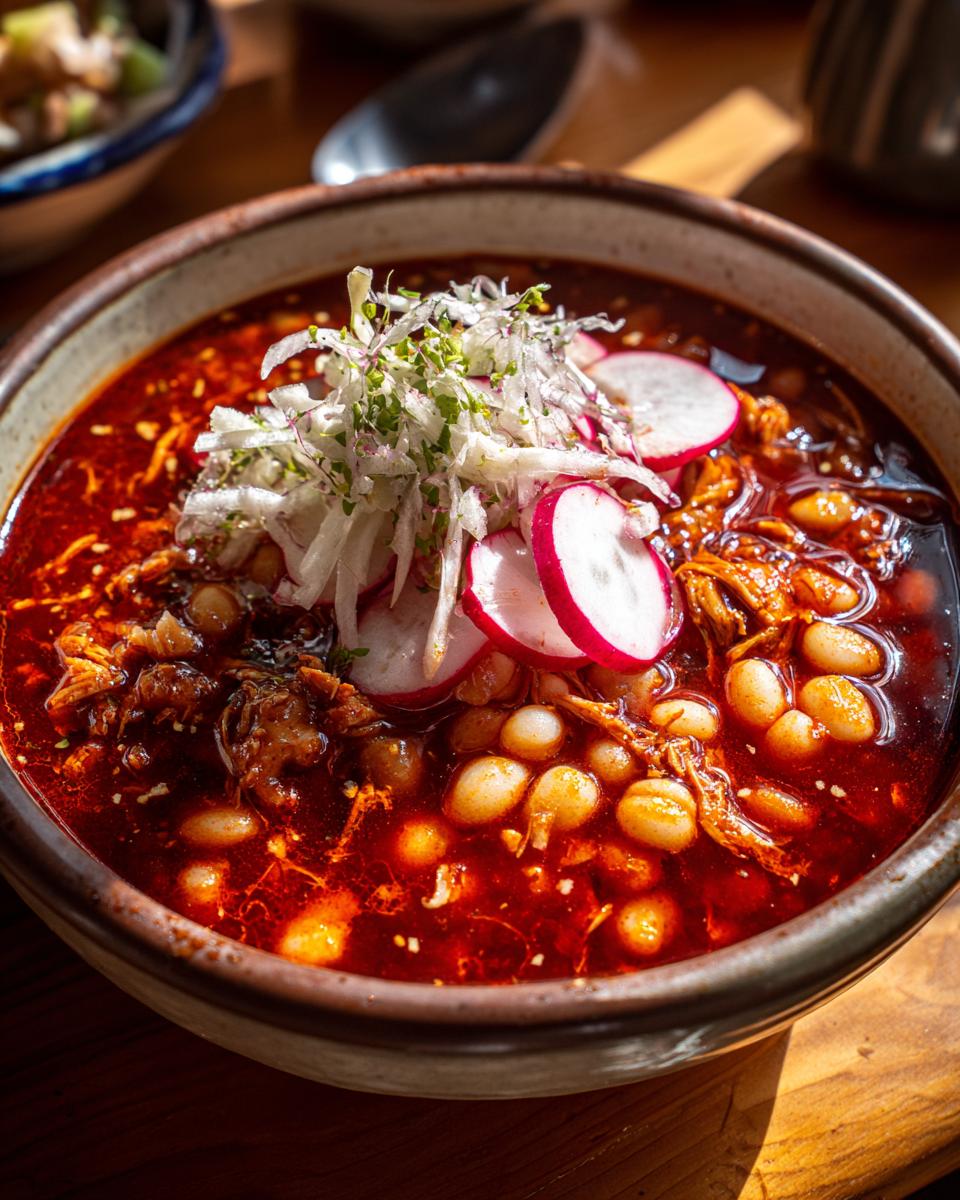
Now, reheating is where you need to treat it gently. Because this is a broth-based soup, you never want to blast it on high heat in the microwave or on the stove; it can separate the fats and the broth too quickly, and boiling it hard can shock the hominy.
The best way? Low and slow on the stovetop. Pour what you plan to eat into a saucepan, add a little splash of water or plain chicken broth if it seems too thick (sometimes the hominy soaks up too much liquid overnight!), and then heat it over medium-low heat. Just let it come up to temperature slowly, stirring occasionally so nothing sticks to the bottom. It should be steaming hot all the way through, but never come to a rolling boil. That gentle reheat keeps your gorgeous red broth looking perfect!
If you’re freezing it, that’s also easy. I like to freeze it in single-serving bags or containers. It lasts great in the freezer for up to three months. When you thaw it in the fridge overnight, remember to add a little extra water when reheating on the stove, as the broth will be super concentrated after being frozen. Enjoy those bonus bowls of pork and red chile soup!
Frequently Asked Questions About Pozole Rojo
It’s normal to have questions when tackling a truly traditional recipe like this! When you’re making something this important, like your Pozole rojo for the holidays, you want everything perfect. I’ve pulled together a few things I used to wonder about back when I was first learning the ropes of this amazing Mexican hominy stew!
Can I make this Pozole Rojo recipe with different meat?
Oh, absolutely you can, though pork shoulder—specifically the butt cut—is truly the king when it comes to authentic Pozole rojo. Why? Because it has the fat content we need to break down and enrich that broth beautifully over those long hours of simmering. If pork isn’t your thing, you can definitely use chicken thighs! They stay moist and shred easily, but just know the resulting broth won’t have that same deep, porky richness. For a vegetarian take on this pork and red chile soup, you can skip the meat entirely and bulk up the stew with extra mushrooms or sweet potatoes, but you’ll lose that traditional texture. Stick with the pork for the most authentic results, but flexibility is key in a home kitchen!
How do I ensure my Pozole Rojo has the deepest red color?
This is all about the chiles, my friend. You absolutely need high-quality, plump, dried guajillo chiles. If your chiles look dusty or pale red when you buy them, they won’t give you that deep ruby color we’re looking for in our pork and red chile soup. The secret really lies in two places: first, toasting them lightly before they soak, which unlocks their color and flavor. Second, and perhaps most important, is what happens *after* you strain that puree. Don’t let the chile sauce mixture come to a rolling boil once you add it to the broth. Just a gentle simmer to heat it through and let it blend with the pork drippings. If you boil it too hard, the vibrant red pigments seem to dull out, and you end up with a brownish soup instead of that signature crimson color we want for our Christmas Eve pozole!
Estimated Nutritional Data for This Pozole Rojo Recipe
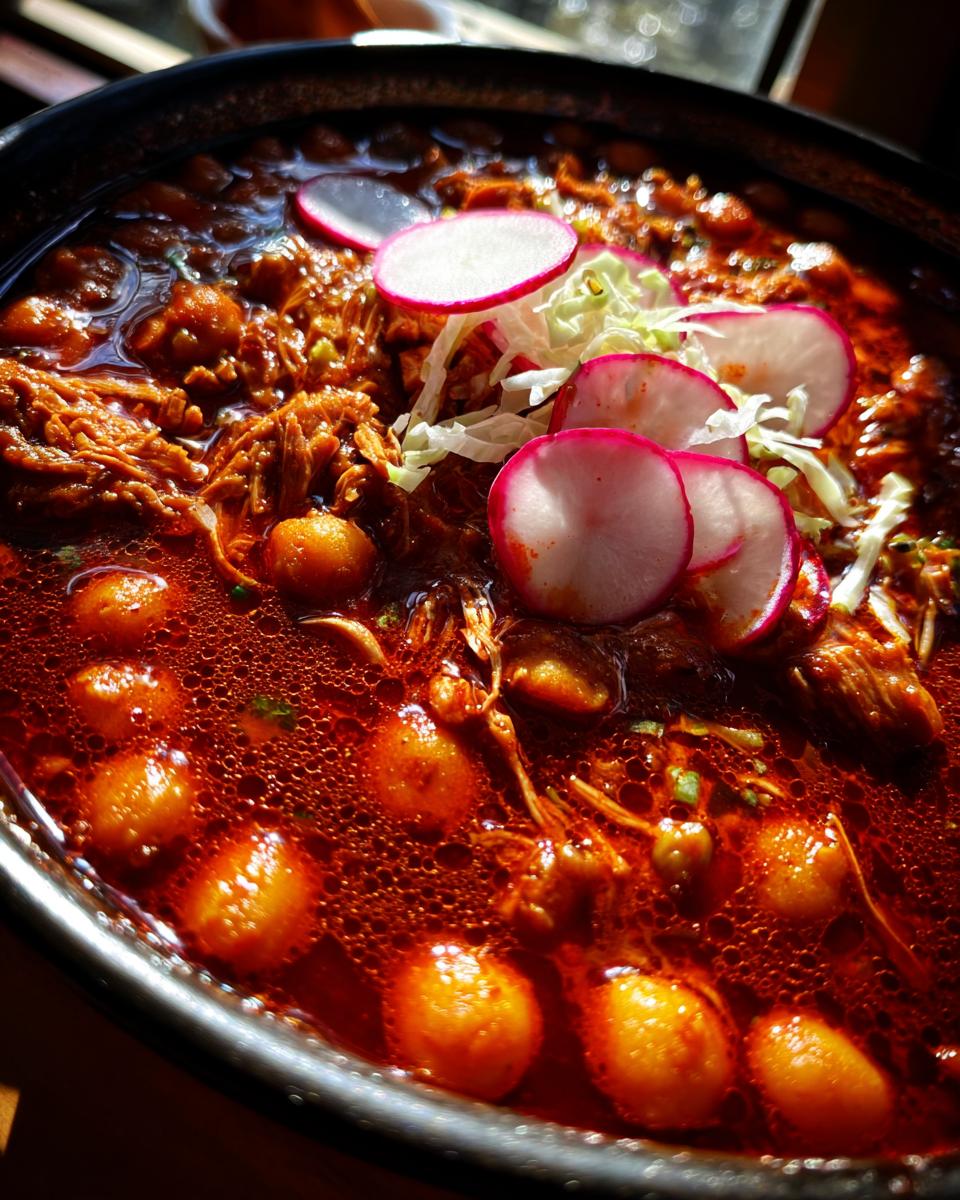
Whew, we made a big, hearty pot of stew here! Because this Pozole rojo is packed with lean pork, rich broth, and fiber-filled hominy, it’s actually pretty balanced for such a comforting dish. When I look at these numbers, I see a warming, substantial meal that sticks with you through the whole celebration.
Keep in mind, these numbers are just an estimate. Since we are dealing with fatty pork shoulder and the exact amount of broth people serve themselves, these figures will change slightly with every bowl. It all depends on if Uncle Joe loads up on the radishes or if Aunt Martha prefers more broth than meat!
Here is the breakdown for an estimated serving size of about 1.5 cups:
- Calories: Around 450 per serving
- Protein: A fantastic 32g—that pork really delivers!
- Fat: Generally around 22g total fat.
- Carbohydrates: About 35g, mostly coming from the hominy.
- Fiber: Great news here—around 8g of glorious fiber!
- Sugar: Relatively low, only about 6g.
- Sodium: We aimed for 650mg, thanks to salting throughout the process, but you can reduce this by using less salt in the initial pork boil if needed.
This recipe is naturally gluten-free, too, which is a huge bonus for any holiday gathering! Enjoy the fact that this traditional Mexican hominy stew is as satisfying to your body as it is to your soul.
Share Your Experience Making This Pozole Rojo
Well, that’s it! You’ve simmered your pork, blended your chiles, and now you have the most magnificent, soul-warming pot of Pozole rojo right on your stove. I truly hope this recipe helps you make amazing memories, whether it’s your first time serving it for Noche Buena or you’re carrying on a long family tradition.
I am dying to know how it turned out! Did that broth get that deep, brick-red color you were hoping for? Did your guests go back for a second (or third) bowl of that delicious pork and red chile soup?
Please, don’t be shy! Come back here and leave a star rating so other cooks know they can conquer this tradition too. If you snap a picture of your beautiful bowls piled high with radishes and lime—I’d love to see it! Drop a comment below telling me about your big holiday meal, or if you tried any tiny twist of your own. You can always send us a note or a picture directly through our contact page, too!
Happy cooking! May your next batch of Mexican hominy stew be the best one yet.
PrintAuthentic Pozole Rojo with Pork

Make a traditional, warming Mexican hominy stew featuring tender pork simmered in a rich, deep red chile broth. This recipe is perfect for holiday gatherings.
- Prep Time: 45 min
- Cook Time: 3 hr
- Total Time: 3 hr 45 min
- Yield: 8 servings 1x
- Category: Soup
- Method: Simmering
- Cuisine: Mexican
- Diet: Gluten Free
Ingredients
- 4 lb pork shoulder, cut into 2-inch chunks
- 1 large white onion, halved
- 4 cloves garlic, smashed
- 1 tablespoon salt
- 1 (29 ounce) can white hominy, drained and rinsed
- 12 dried guajillo chiles, stems and seeds removed
- 4 dried ancho chiles, stems and seeds removed
- 4 cups water, for soaking chiles
- 1 teaspoon dried Mexican oregano
- 1/2 teaspoon ground cumin
- Garnish: shredded cabbage or lettuce, sliced radishes, diced white onion, lime wedges
Instructions
- Place the pork shoulder chunks in a large stockpot. Add the onion halves, smashed garlic, and salt. Cover the pork with water, about 1 inch above the meat. Bring to a boil, then reduce heat and simmer, partially covered, for 1.5 to 2 hours, or until the pork is very tender. Skim off any foam that rises to the top during the first 30 minutes.
- While the pork cooks, prepare the chile sauce. Place the dried guajillo and ancho chiles in a saucepan. Cover with 4 cups of fresh water and bring to a simmer. Remove from heat, cover, and let the chiles soak for 30 minutes until soft.
- Transfer the softened chiles and about 1 cup of the soaking liquid to a blender. Add the oregano and cumin. Blend until completely smooth. If the mixture is too thick, add a little more soaking liquid, one tablespoon at a time.
- Strain the chile puree through a fine-mesh sieve into a bowl, pressing the solids with the back of a spoon to extract all the liquid. Discard the solids left in the sieve. This step is important for a smooth broth.
- Once the pork is tender, remove the meat from the pot and shred it using two forks. Discard the onion and garlic cloves from the broth. You should have about 6-8 cups of broth remaining.
- Pour the strained chile sauce into the broth in the stockpot. Stir well to combine. Bring the mixture to a gentle simmer.
- Add the drained hominy and the shredded pork back into the pot. Simmer for another 30 minutes, allowing the flavors to meld. Taste and adjust salt if necessary.
- Serve the pozole hot in bowls. Provide the garnishes—cabbage, radishes, onion, and lime—on the side so each person can customize their bowl.
Notes
- For a deeper flavor, toast the dried chiles lightly in a dry skillet before soaking them. Watch them closely to prevent burning.
- If you prefer a less spicy pozole, remove the seeds and veins from the ancho chiles completely.
- You can prepare the pork and chile sauce a day ahead. Store them separately in the refrigerator and combine them before serving.
Nutrition
- Serving Size: 1.5 cups
- Calories: 450
- Sugar: 6
- Sodium: 650
- Fat: 22
- Saturated Fat: 8
- Unsaturated Fat: 10
- Trans Fat: 0
- Carbohydrates: 35
- Fiber: 8
- Protein: 32
- Cholesterol: 90